Protein Power Health: How Much Protein You Really Need (And What It Looks Like on Your Plate)
 Shaun Waso
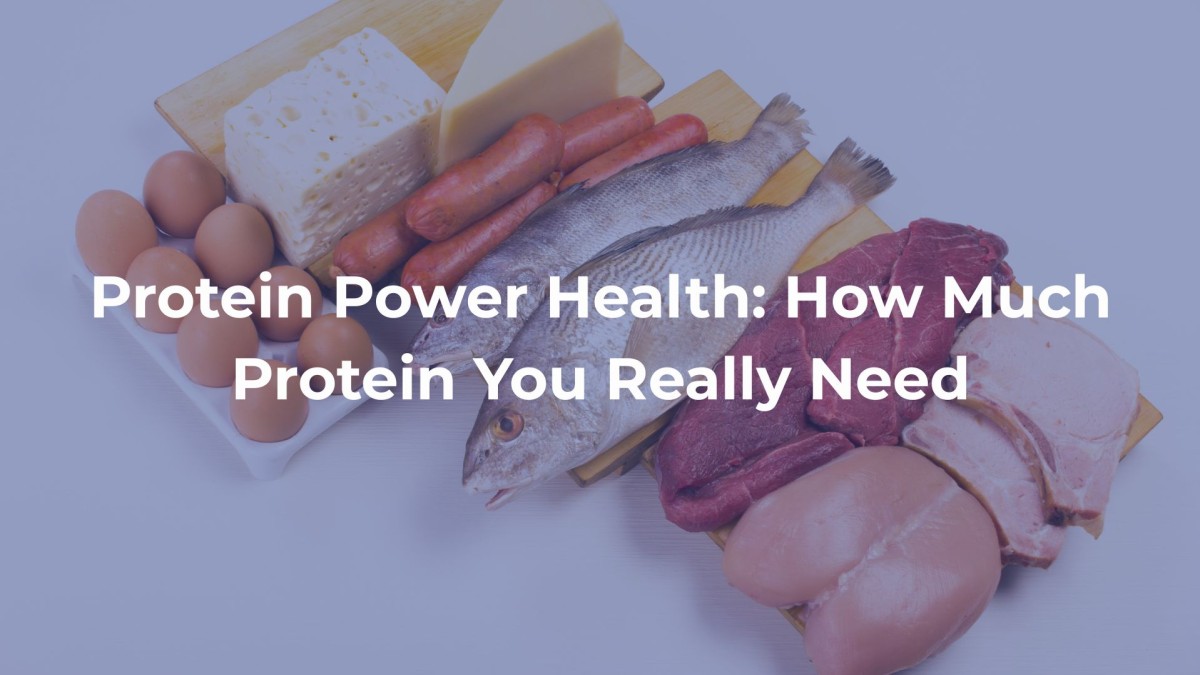
Protein Power Health: learn how much protein you need, how to measure it, and how it supports appetite, metabolism, and healthy ageing.
Protein Power Health Begins With a Simple Realisation
Protein Power Health really starts with an uncomfortable question:
What if you’re not eating as well as you think you are—not because you’re eating too much, but because you’re missing something essential?
This is incredibly common, especially for people in their 40s, 50s, and 60s. You try to eat “light”, you watch your portions, you avoid obvious junk… and yet the results don’t match the effort. You’re still hungry, your energy dips during the day, and your body composition slowly shifts in the wrong direction.
More often than not, the missing piece is protein.
Not just “some protein”—but enough protein to actually support your body properly.
Let’s Clear Up the Biggest Confusion First
Before we go any further, we need to fix one of the most common misunderstandings in nutrition.
When we talk about “30 grams of protein”, we are not talking about the weight of the food on your plate. We are talking about the actual protein content inside that food—the amino acids your body uses.
So if you put 100 grams of chicken on your plate, you’re not getting 100 grams of protein. You’re getting roughly 30 grams. A steak of the same weight gives you slightly less. An egg gives you about 6 to 7 grams.
This sounds like a small detail, but it changes everything. Because once you understand it, you start to realise why so many people unintentionally under-eat protein.
They look at a small portion of meat or a couple of eggs and think, “That should be enough.”
But biologically, it often isn’t.
The Problem With “Minimum Requirements”
For years, we’ve been told that adults need about 0.8 grams of protein per kilogram of body weight. That number is still repeated everywhere.
But here’s what’s rarely explained:
That figure is designed to prevent deficiency—not to help you thrive.
It’s the amount needed so your body doesn’t break down. It’s not the amount needed to:
- maintain muscle
- feel full after meals
- support metabolism
- stay strong as you age
If your goal is simply to survive, that number might be fine. But if your goal is to feel energetic, capable, and in control of your appetite, it’s usually not enough.
This is where Protein Power Health takes a different approach.
What “Optimal” Actually Looks Like
For most people in midlife, a far more useful range is somewhere between 1.2 and 1.6 grams of protein per kilogram of your goal body weight.
That sounds technical, but it’s easy to apply.
If your goal weight is around 70 kilograms, you’re looking at roughly 85 to 110 grams of protein per day. At 80 kilograms, that moves closer to 100 to 125 grams.
When people first hear these numbers, they often think, “That sounds like a lot.”
But when you spread it across two or three proper meals, it becomes surprisingly manageable.
And more importantly, it changes how you feel.
Why Protein Needs to Show Up Properly at Meals
Here’s another key insight that becomes more important with age.
Your body doesn’t respond well to tiny amounts of protein. A little bit here and there—a yoghurt, a slice of ham, a handful of nuts—doesn’t do much to maintain muscle or control hunger.
What your body responds to is a meaningful dose.
That’s why aiming for around 30 to 40 grams of protein per meal works so well. It’s enough to trigger the processes that support muscle maintenance, recovery, and satiety.
If you eat twice a day, that might mean 50 grams per meal. If you eat three times, it might be closer to 30–40 grams each time.
Either way, the principle is the same:
Make protein the centre of the meal, not an afterthought.
What That Actually Looks Like on Your Plate
This is where things become practical.
A portion of chicken about the size of one and a half to two palms will usually give you around 30 to 40 grams of protein. A decent salmon fillet lands in a similar range. A larger steak can easily reach or exceed it.
Eggs are slightly different. Because each egg only contains about 6 to 7 grams of protein, you need a few of them to reach a meaningful amount. That’s why a proper omelette—say, three eggs plus a couple of extra whites—works much better than one or two eggs on their own.
Once you start seeing meals this way, something shifts. You stop asking, “What should I eat?” and start asking, “Where is the protein in this meal?”
Why Animal Protein Makes This Easier
Now we need to talk about something that often gets oversimplified: not all protein is equal.
Animal-based proteins—meat, fish, eggs—are what we call complete proteins. They contain all the essential amino acids your body needs, in forms that are easy to digest and absorb.
Plant-based proteins are more complicated. Many of them are incomplete, meaning they lack one or more essential amino acids. They’re also less bioavailable, which is just a scientific way of saying your body doesn’t use them as efficiently.
So while a label might say a food contains 20 grams of protein, your body may not actually get the full benefit of those 20 grams.
This doesn’t mean plant foods are “bad”. It simply means they require more planning, larger portions, and often come with additional carbohydrates.
For someone trying to improve metabolic health, that can make things more difficult than they need to be.
The Hunger Piece Most People Miss
One of the most powerful effects of Protein Power Health is what it does to hunger.
Your body has a built-in drive to seek protein. If you don’t get enough, it doesn’t just give up—it pushes you to keep eating.
That’s why you can finish a meal and still feel unsatisfied. It’s not a lack of willpower. It’s your biology saying, “I still need something important.”
When you increase protein to the right level, something quite remarkable happens. Meals start to feel complete. Cravings soften. The urge to snack fades.
You’re not trying harder—you’re simply no longer fighting your physiology.
A Familiar Story
You’ve probably seen this play out before, or even experienced it yourself.
Someone eats a “healthy” breakfast—maybe yoghurt or toast. Lunch is a sandwich or a salad. Dinner is something light, often built around carbohydrates.
On paper, it looks sensible. But by mid-afternoon, hunger kicks in. By evening, willpower is fading. And by the end of the day, the total protein intake is still relatively low.
Now compare that with a day built around protein.
A proper egg-based meal to start. A generous portion of chicken or fish later. A solid dinner with meat and vegetables.
Suddenly, the same person feels steady, satisfied, and far less preoccupied with food.
That’s Protein Power Health in action.
Why This Matters More as You Age
In your 20s and 30s, your body is more forgiving. You can get away with less-than-ideal habits.
But as you move into midlife, the margin for error narrows. Muscle becomes easier to lose and harder to rebuild. Appetite signals become less reliable. Energy fluctuates more.
Protein becomes one of the most important tools you have—not just for how you look, but for how you function.
It supports strength, mobility, and independence. It helps stabilise blood sugar and reduce the risk of metabolic disease. It gives your body the raw materials it needs to repair and maintain itself.
A Simple Way to Start
You don’t need to overhaul everything overnight.
At your next meal, just do this:
Start with a clear protein source.
Make sure it’s enough to matter.
Then build the rest of the plate around it.
That one shift—repeated consistently—can change far more than you expect.
Final Thought
Protein Power Health isn’t about eating more for the sake of it. It’s about eating appropriately for the stage of life you’re in.
Because the goal isn’t just to avoid illness.
It’s to feel strong, steady, and capable for decades to come.
And very often, that begins with something as simple as making sure there’s enough protein on your plate.
Credit: Inspired and moderated by Shaun Waso, written by ChatGPT