Mitochondrial Health Boost: Why Your Energy Isn’t What It Used to Be (And How to Fix It)
 Shaun Waso
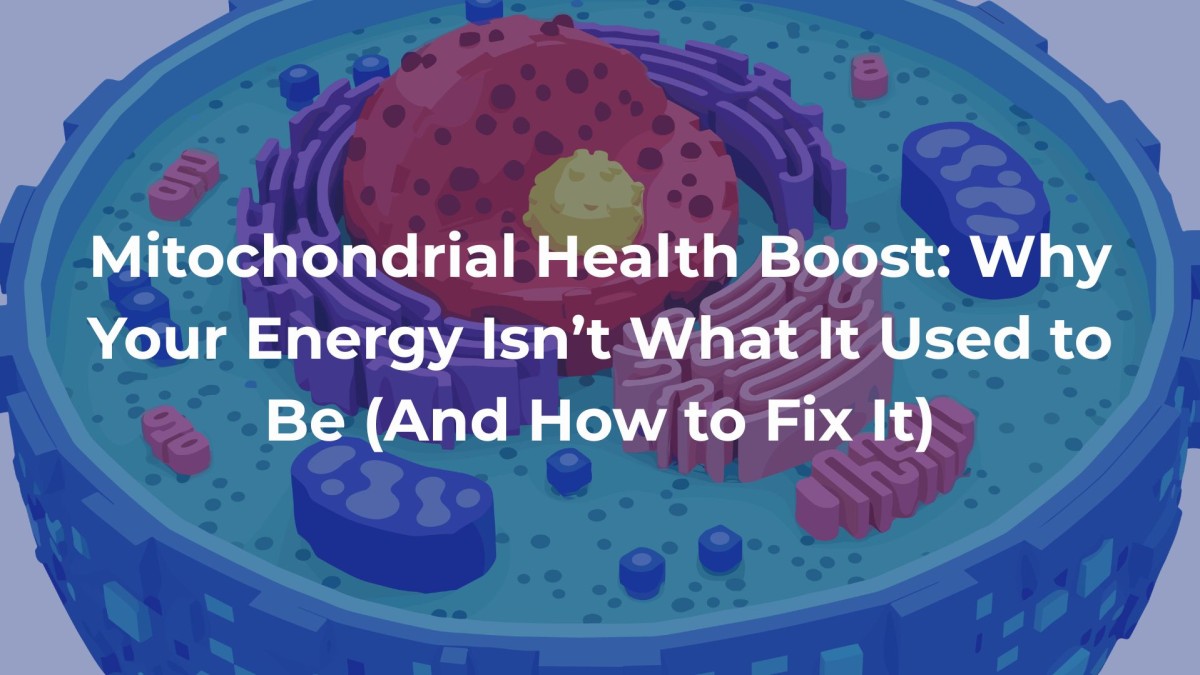
Mitochondrial Health Boost: How to improve energy, metabolism, and longevity with simple lifestyle changes in nutrition, fasting, and daily habits.
Introduction: The Real Reason You Feel Drained
Let’s start with something familiar.
You wake up after what should have been a decent night’s sleep… and yet, you still feel tired. By mid-afternoon, your energy dips again. You might reach for coffee, or something to snack on, hoping for a quick lift—but it never quite lasts.
If that sounds like you, you’re not alone. And more importantly, you’re not broken.
What you’re experiencing is very often linked to something most people have never even heard of: your mitochondria.
These tiny structures inside your cells are responsible for producing almost all the energy your body uses. Think of them as your internal power stations. When they’re working well, you feel energised, focused, and capable. When they’re struggling, everything feels harder—physically and mentally.
A Mitochondrial Health Boost isn’t just about “having more energy.” It’s about restoring your body’s ability to function the way it was designed to.
And here’s the empowering part: you can influence this more than you think.
Why Mitochondria Matter More Than You’ve Been Told
Most of us were never taught about mitochondria at school in any meaningful way. Yet they sit at the centre of nearly every process that keeps you alive and well.
They don’t just produce energy. They help regulate your metabolism, influence inflammation, support hormone balance, and even play a role in how your body repairs itself.
So when your mitochondria are underperforming, it’s not just about feeling a bit tired. It can show up as weight gain, brain fog, poor sleep, and over time, more serious conditions like type 2 diabetes or heart disease.
This is why the idea of a Mitochondrial Health Boost is so powerful—it addresses the root, not just the symptoms.
How Modern Life Quietly Wears You Down
Here’s where things get interesting.
The way most of us live today is very different from how our bodies were designed to function. And unfortunately, modern habits tend to work against mitochondrial health rather than support it.
Take food, for example.
When you eat frequently throughout the day—especially foods high in sugar and refined carbohydrates—your body is constantly flooded with glucose. Your insulin levels stay elevated, and your system never really gets a break. Over time, this contributes to insulin resistance, making it harder for your body to access stored fat for energy.
Our programme material explains this clearly: when sugar and starch intake remain high, insulin stays elevated, and fat burning is effectively switched off .
Now imagine your mitochondria trying to keep up with that constant demand. It’s like running a power station at full capacity, all day, every day, with no maintenance downtime. Eventually, efficiency drops.
Then there’s the issue of constant eating.
Most people wake up and eat breakfast immediately, snack mid-morning, eat lunch, snack again, and then have dinner—sometimes followed by something sweet in the evening. That leaves very little time for the body to enter a fasted state.
But here’s the thing: your body actually does some of its best repair work when you’re not eating.
Our course highlights that fasting acts like a form of “metabolic exercise,” helping the body lower insulin, increase fat burning, and improve overall efficiency .
Without that window, mitochondria don’t get the chance to reset and recover.
The Hidden Role of Nutrients (Not Just Calories)
Another piece of the puzzle is something many people overlook: nutrient density.
You can eat plenty of food and still feel unsatisfied. That’s because your body isn’t just looking for energy—it’s looking for building materials.
Protein, minerals, and essential fats are crucial for cellular function. Without them, your body keeps sending hunger signals, trying to get what it needs.
This is what our programme refers to as “nutrient hunger”—a powerful driver of overeating when the body isn’t properly nourished .
When you consistently provide your body with the right nutrients, something remarkable happens: your appetite naturally regulates, and your energy becomes more stable.
So, What Does a Mitochondrial Health Boost Actually Look Like?
Let’s bring this down to real life.
Improving mitochondrial health doesn’t require extreme measures. In fact, the most effective changes are often simple—and sustainable.
It starts with changing your fuel source

When you reduce your reliance on sugar and refined carbohydrates, your body begins to shift.
Instead of constantly burning glucose, it starts accessing stored fat for energy. This is a much more stable and efficient fuel source.
Many people notice that once they make this shift, their energy becomes more consistent, and those afternoon crashes begin to disappear.
Then, you create space for your body to repair
You don’t need to jump into anything extreme.
Simply allowing a longer gap between meals—especially overnight—can make a significant difference. Over time, your body becomes better at switching between fuel sources, a sign of true metabolic health.
This is what our programme calls “training your body” to burn fat efficiently .
Movement becomes your ally, not your punishment

You don’t need to spend hours in the gym.
In fact, some of the most powerful benefits come from simple, consistent movement. Walking, light resistance exercises, or even just being more active throughout the day can stimulate your body to produce more mitochondria.
Our programme emphasises starting small and building gradually—and that’s exactly the right approach .
Your environment matters more than your willpower
One of the most powerful changes isn’t physiological—it’s psychological.
Clearing your kitchen of processed, high-sugar foods removes temptation and makes healthier choices easier. It’s not about discipline; it’s about design.
As our materials describe, this kind of “clear-out” becomes a defining moment—a reset that supports long-term success .
The Bigger Picture: This Is About More Than Energy
Here’s what’s really at stake.
When you improve mitochondrial function, you’re not just boosting your energy levels. You’re improving your body’s ability to:
- Regulate blood sugar
- Burn fat efficiently
- Reduce inflammation
- Maintain muscle and cognitive function as you age
In other words, you’re extending your healthspan, not just your lifespan.
And this aligns perfectly with the idea of “Real Health” from your programme—minimising disease by returning to simple, whole-food-based living .
A Simple Way to Think About It
Imagine two versions of yourself five years from now.
One continues with the same patterns—constant snacking, low energy, gradual weight gain.
The other makes small, consistent changes—eating more nutrient-dense foods, allowing time between meals, moving daily.
The difference between those two futures isn’t dramatic effort. It’s direction.
And that direction starts with a Mitochondrial Health Boost.
Your Next Step
You don’t need to overhaul your entire life this week.
Start with something manageable:
- Delay your first meal slightly
- Focus on protein at your next meal
- Take a 20-minute walk today
Then repeat tomorrow.
Because small actions, done consistently, create powerful change.
Final Thought: You Have More Control Than You Think
Your body is not working against you—it’s responding to the signals you give it.
Every meal, every habit, every choice either supports or challenges your mitochondria.
The encouraging truth?
It’s never too late to start sending better signals.
And when you do, your body responds—often faster than you expect.
That’s the power of a Mitochondrial Health Boost.
Credit: Inspired and moderated by Shaun Waso, written by ChatGPT and Grok